Replit AI
FreemiumAI-powered cloud development platform. Build, deploy, and host apps with an AI agent that can generate full applications from natural language.
What does this tool do?
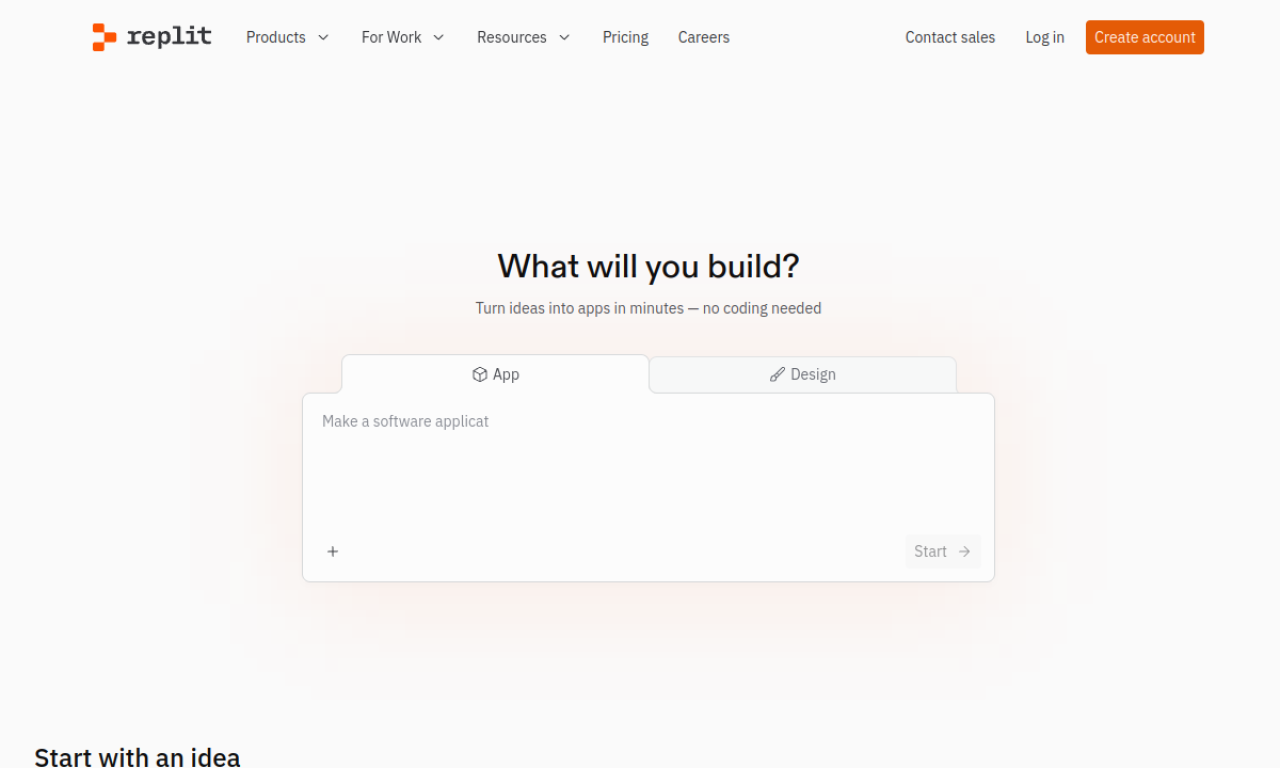
Replit is a cloud-based development platform that combines an IDE, deployment infrastructure, and AI-assisted code generation into a single environment. The core differentiator is its Agent feature—a conversational AI that generates production-ready code from natural language descriptions, then iterates on it as you refine requirements. Beyond code generation, Replit provides built-in databases, authentication, hosting, and monitoring, eliminating the need to juggle separate services. It supports full-stack development across multiple languages and frameworks, with a visual design editor for building UIs without manual CSS. The platform targets developers who want to ship applications quickly without infrastructure setup overhead, as well as non-technical founders who need functional prototypes from text descriptions.
AI analysis from Feb 23, 2026
Key Features
- AI Agent that generates full applications from natural language prompts and iterates on requirements through conversation
- Built-in database, authentication, and hosting infrastructure with zero manual configuration
- Visual design editor with live editing and design system import capability
- Workflow automation and bot creation for repetitive operational tasks
- Pre-deployment security screening and enterprise-grade access controls (SSO/SAML, SOC2)
- One-click integrations with third-party services including Stripe, OpenAI, and other APIs
- Mobile app building capability alongside web applications
- Collaborative Teams workspace and Expert Network for hiring additional help
Use Cases
- 1Rapid prototyping of SaaS applications or MVPs where time-to-market is critical
- 2Building AI-powered applications (chatbots, recipe generators, brainstorming tools) with minimal backend setup
- 3Creating internal business tools and dashboards without hiring dedicated backend infrastructure teams
- 4Portfolio projects and personal websites for developers or freelancers
- 5Educational projects for learning full-stack development with AI assistance reducing boilerplate
- 6Small business owners building e-commerce stores or landing pages without coding knowledge
- 7Workflow automation and bot creation for operational tasks with pluggable integrations
Pros & Cons
Advantages
- Agent generates genuinely functional, production-ready code from plain English descriptions, dramatically reducing development time compared to coding from scratch
- All-in-one platform eliminates tool fragmentation—no need to separately configure hosting, databases, authentication, or deployment pipelines
- Visual design editor with design system integration allows non-technical stakeholders to influence UI/UX without breaking the application
- Built-in integrations with popular services (Stripe, OpenAI, etc.) work without manual API key management, reducing security friction
- Collaborative Teams feature and enterprise SSO/SAML support make it viable for organizational use, not just individual developers
Limitations
- Agent-generated code quality and architectural decisions may not match enterprise standards; manual code review and refactoring often necessary for production systems
- Pricing information is hidden behind a login wall, making cost comparison difficult for prospects evaluating the tool
- Lock-in risk: full reliance on Replit's proprietary hosting and Agent means migrating away requires significant code extraction and infrastructure rebuild
- Limited control over deployment specifics compared to traditional infrastructure-as-code tools; suitable for simple apps but constrained for complex deployment requirements
- Agent's effectiveness depends heavily on prompt quality; non-technical users may struggle to articulate requirements clearly enough for good code generation
Pricing Details
Pricing details not publicly available. The website does not display pricing tiers, free tier limits, or paid plan costs; users must log in or contact sales to access pricing information.
Who is this for?
Early-stage founders and startup teams building MVPs quickly; freelance and full-stack developers seeking to reduce infrastructure management overhead; small business owners building e-commerce or business tools without technical depth; product managers and designers collaborating on application prototypes; enterprises needing rapid internal tool development with security controls; educators teaching full-stack development with AI-assisted scaffolding.